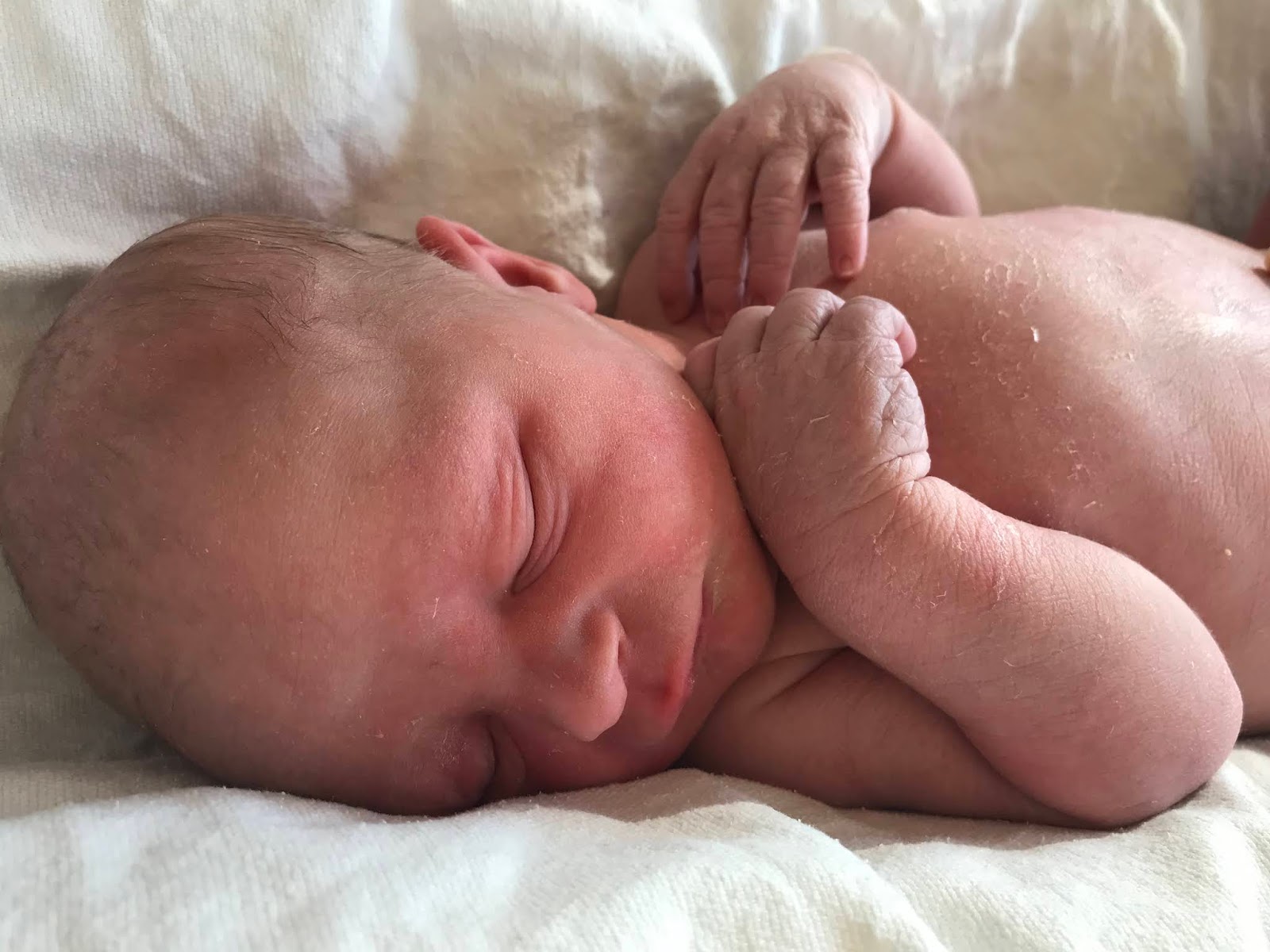
Wednesday, July 15, 2020

homesick

1-20-2020 seemed like a cool due date. It's MLK day, for one. Naked, wet life in the first month of a new decade, for another. And all of those twenties in a row.. strangely satisfying! But January 20 would not be Porter's birthday. Instead it stands as a grim national banner, marking the first confirmed Covid-19 case in the United States.

Six days later Porter came. I remember the casual sign taped at the receptionist's desk in the ER-- just a regular piece of computer paper with the default font, asking patients to alert the person behind the counter if you'd recently traveled to Wuhan, Italy, or Iran. The images of empty subway stations, masked citizens, and scrolling obituaries felt like exotic, foreign problems then. Kobe Bryant's death seemed to be the only one that mattered the day that Porter was born.

The day I had my six-week postpartum check-up with my midwife was an unusually mild day for March in New Jersey. I remember walking out afterwards with my perfect trophy baby, and a healthy body that I recognized as my own and was grateful for. My stitches were gone and my uterus had tucked itself back where it belongs, and even greater healing had taken place within our home. Our family had survived two incredibly draining years (see here, ICYMI), and my shoulders, alleviated and untroubled for the first time in so long, finally let go. It felt like Porter and I were free, a new beginning. Maybe we'd even have an early spring. 

A week later the world stopped. There's no reason to describe the scrambling, the angst, or the upheaval. It happened to all of us. The pandemic seemed to cut into each of our films, turning our moving pictures into stills. It caught our family with Chris working inside the make-shift Covid ICU floors as the only chaplain at a community hospital in the epicenter of this global curse. I was home alone teaching our kindergartener how to read and write, sending apologetic emails to her PE teacher for blowing off the obstacle course assignment, resentfully shoving screens in front of our 2-year-old's eyes, and wondering whether I should call this heavy fog "postpartum" or "pandemic" anxiety and depression. And that was before our next freeze frame when my laughable "maternity leave" ended and I added full-time WFH to my to-do list the same week that the virus peaked in New Jersey. 

I've heard that grief slices life into Before and After, and that try as you might, you never get to return to Before. I'm a sucker for newborns; I always have been. The birthday cocktail of endorphins, oxytocin, and the smell of baby's pink skin is intoxicating, and the world seems to simultaneously stop spinning and spin wildly away. But the way I look back at Porter's first weeks of life is more than wistful. My eyes linger at each picture wringing out any drop of Before, homesick for a home that is no longer here. 

The big kids must feel it too-- the satirical homesickness felt by those of us who never leave the house. On days that were too rainy or too cold to play outside, I would take them for a drive to stretch the afternoon to dinnertime. The kids took turns picking our route. Each time they wanted to look out the car windows to see their schools, the library, and the hospital (now adorned with "healthcare hero" signs), asking to recreate meeting our new baby who didn't even have a name back then. Their last memories of Before.

The name Porter means "gatekeeper." In the Benedictine tradition, the porter is someone chosen to welcome visitors to the monastery, no matter who they are, or how they arrive. Said another way, the porter is someone who looks for strangers to welcome in as guests, to see Christ in each of them. The name rose to the top of our short list as we watched in horror at the current administration's immigration policies that separate families at our border, and perpetuate the discrimination against "strangers." We hope that our Porter will be a gatekeeper with the spirit of proactive hospitality, inclusion, and compassion. As Pope Francis said, "The future is, most of all, in the hands of those people who recognize the other as 'you' and themselves as part of an 'us.' We all need each other."

The passive aggressive middle finger to Donald Trump when we named our son felt good too.

It was impossible to know then, on 1-26-2020, that Porter would be another kind of gatekeeper in our family-- a strange bridge connecting us from Before to After. In so many ways it feels like we are stuck in the same blurry still-photo, the snapshot taken when none of us was ready-- not looking at the camera, chewing a bite of food, blinking our eyes, not smiling. 

But then I look again. I see the growing baby, the one who learned to smile the same week wedged between Before and After. And I earnestly hope that we have only come upon a new gate, one with a hospitable porter who seeks strangers to welcome as neighbors, one where we value communion over self-centeredness. A new home that might heal the homesickness that sickens us today.


Wednesday, April 15, 2020

Porter's story, part 2

Waiting for the onset of labor is a weird game of mental toughness (and like I said, my brain was fried). (See part 1)

As a behavior analyst, I've become a really good observer. Identifying patterns of behavior and manipulating environmental variables is my actual livelihood. But this skill set went into hyperdrive about the time I hit 37 weeks when I began having prodromal labor off and on (just as I had with Declan). I became a psycho for the next month trying to analyze every possible labor symptom in hopes of catching the right wave and hanging on so we didn't end up at 42 weeks again. This exhausting mental exercise is quite useless, by the way. 10/10 would not recommend. 

Cerebrally, I knew that I couldn't control when labor would begin, but what kind of perfectionist would I be if I didn't try and control everything else around it? For weeks I attempted the fruitless tasks of keeping the laundry folded, the dishwasher emptied, the toys organized, the fridge stocked, and the beds made. Bless my mother's heart for helping me execute said rituals when she joined us in Jersey just before my due date. 

Basically, I needed homeostasis. I wanted to be continuously well-rested, well-fed, well-hydrated, well-adjusted, and showered. Clean hair and shaved legs, bonuses. I barked orders from the couch to my kids as a hilarious attempt to keep them in this perfect state of readiness too. Even more hilariously, I checked the forecast multiple times a day as if I could will my baby to be born into the sunshine.


... 

Friday night I climbed into bed as a new round of contractions began. My belly was high and huge as ever, and if Chris videoed what I looked like rolling over, it would probably be a viral gif by now. I shrugged off the (painful) contractions, irked that they would taunt me with spontaneous labor only four days after my due date. I was equal parts determined to sleep, and to stay awake neurotically timing my contractions, as if that would keep the waves coming. My neurosis won and I stayed awake the ENTIRE night tapping the contraction button every 10 to 15 minutes on my newly downloaded app. I finally nodded off after 6am, just in time for the kids to wake (me) up.

As I cynically predicted, my contractions petered out that morning, further reinforcing my self-fulfilling prophecy that I would do this song and dance for many more days and nights until my pelvic floor just fell out from under me. So when the same pattern of contractions began wrapping around my back and belly again that afternoon, I pushed all thoughts of labor aside. After convincing Chris (and myself) that there was nothing to see here, I sent him to Philadelphia in the driving rain to pick my dad up from the airport. Meanwhile I stared into my closet trying to dig up anything that could possibly cover my enormous belly for an ABA conference scheduled the next day. Pure denial. 

By dinnertime, I was bleeding, contracting, and nearly dry-heaving as I hid in my bedroom away from the salmon in the oven. I texted my beloved doula, Kristy, (who moved out of state after Declan was born) to give her the TMI play-by-play that she's probably grown to expect from me now three labors deep. (Side note, everyone should have at least one friend that thinks conversations about mucus plugs and the like are completely ordinary.) Her sage advice, “you’re in labor; go to bed!”

Somehow Kristy’s encouragement and my own exhaustion weren’t enough to convince me to sleep, or that this was *real* labor. So with the leftover salmon safely in the fridge, and the kids tucked in bed, I rejoined Chris and my parents in our living room to do figure eights on my birthing ball in hopes of rocking the baby lower and lower. Eventually I went to bed, and closed my eyes for a contraction or two before it became obvious that I had missed my chance for any sleep. It was close to midnight and I knew I’d be holding my baby by the next morning. So instead of being well-fed and well-rested, I was starving and nauseous (a la first trimester vibes), and was heading into active labor with about 20 minutes of sleep since Thursday night. Perfect.

Looking back, I wish I had taken a Benadryl and fought for even a little sleep, or at least drowsy labor in bed. But strangely, all I wanted to do was get out of my house, away from my sleeping children, where I could labor selfishly. (I’m pretty sure birth is the antithesis of self-centeredness. What I mean is, I only wanted to think about myself— ergo, selfish—and wanted to be close to my midwife and far from my light sleepers.) So I called my midwife, Jennifer, grabbed a box of Cheerios to eat on the highway, and awkwardly moved my 20-pound bump out of the way to tie my sneakers one last time. Chris and I were off to the hospital and, embarrassingly, it almost felt like a date. 

We met Jennifer in the ER and rode the elevator together to the sixth floor where we met our nurse, Katie. There are three midwives at my practice (all of whom have labored with me now!), and it always feels funny to see who’s on-call for your birth, like “hey, we’re about to do this really awesome thing together, but also, I’m probably about to get completely naked and shit all over you.” (But really, Yelena, sorry I almost pooped on your shoe last time..) 

By the time we settled in, checked on the baby and my cervix, and went through my medical history with Katie, it was 2am. My labor had (predictably) slowed from my transition from home to hospital and I felt mostly fine. With no birth photographer this time around (why did you both have you move outta state, Esther and Kristy??), I took a “boomerang” of my hospital tube socks with the non-slip grippies for posterity, swallowed a few spoonfuls of applesauce in a failed attempt to curb the nausea/starvation combo, and then tried (and failed) again to sleep. 

Soon enough the “leg shakes” came which had been my cue during my other labors that the real fun was about to begin. I asked Katie to fill up the Jacuzzi tub that I’ve come to count on, and I climbed in. Everything felt pretty familiar and pretty manageable… until it didn’t. In addition to the back labor that has come along for every second of each of my labors, an excruciating, invisible line appeared next to my spine that shot electric pain all the way up to my neck and down my left leg. And unlike the contractions that helped me out with little breaks in between, this ungodly line grabbed on to the contractions so the unbearable throb felt continuous. In that dark haze in the middle of the night, labor no longer felt like painful, hard work. It felt like suffering.

My trusty Jacuzzi tub let me down, and I needed out. And needed to puke. I remember catching a glimpse of my sallow face in the bathroom mirror as I threw away the barf bag and swished some water around my mouth, thinking, “what the heck has happened to me?” When Katie offered to start an IV with some anti-nausea meds, I was ALL in, and in the same breath I asked for an epidural.

I think I was almost as surprised to say the words as my midwife was to hear them. “That doesn’t sound like you,” she said. She was right— it didn’t sound like any conversation we had ever had in the years I have known her, but I also really didn’t feel like myself either. The pain from my other labors must be imprinted in my mind because I knew right where I was in my labor trajectory without a cervical exam-- just beginning transition, but still miles away from delivery. Even greater pain was on its way— unhelpful, intrusive third-birth baggage—and I was not ready to take on another layer of pain.

I’m not sure how they teach midwives what to say or do when their patient asks for something they’ve repeatedly said they didn’t want, but Jennifer knew. She massaged my back, offered more support and reasonable alternatives (if I had been up for listening to reason), and validated my pain. She walked the delicate line between encouraging me to stay the course (out of my own preferences, not hers), and helping me get the pharmaceutical pain-relief I was asking for. Most impressively, she did it all without letting me feel like a birthing failure, even if I wouldn't be getting the Ina-May-birthing-goddess experience this time. I suspect this kind of compassionate intuition is earned from her years of supporting women during the most painful and intimate hours of their lives. I remember leaning over the birthing ball, locking eyes with her, and shaking my head, “no.”

You'd think for all of my pregnancies that I would have read up on epidurals at some point (especially considering I'd persevered through two unmedicated births to avoid it), but I didn't have a clue. I don’t remember much from the procedure. Just the blinding lights and the way Jennifer and Katie held me like I was their own sister. 

A few minutes later my contractions were erased. It was like magic, and I finally understood why most women pick the giant spine needle over the ring of fire. Although some of my back labor persisted, and that devil line on my left side hung on tight, I finally fell asleep for the first time in two days.

While I slept, my body labored on without me. And when I woke up an hour or two later, the sun was beginning to rise and my body was instinctually bearing down. By now it was 7am (shift change), but instead of tagging out, Jennifer stayed with me, and Danielle joined our team. 

Usually at this point in birth, my body is splitting in two and I look something like this:


But this time I casually sat in bed and chatted with my midwives. It might have been brunch with mimosas except that I was fully dilated and completely aware that with each contraction I was shitting myself. (Insert soapbox of how undignified birth is and how birth workers somehow manage to give that dignity back to you.) I asked Danielle about her recent trip to Disney World with her kids, commented on how completely unlabor-like "labor" was with an epidural, and asked how delivery was about to go down-- something that happens organically and loudly when there's not an epidural muting the waves. 

After a couple of pushes on my back (something I swore I'd never do again after my first birth), Danielle suggested I flip over onto my hands and knees-- a trick I didn't know was possible with an epidural. When I wasn't holding my breath and counting to ten, I was asking where the heck the ring of fire went, amused and incredulous that this was even birth. In fact, looking back I'm kind of sorry that I slept through transition, and skipped out on the ring of fire (in a really bizarre way), like I chose to miss part of my son's birth. There's just something about feeling every ounce of pain, and then trading it-- in an instant-- for the greatest joy and relief. I can't describe how odd it felt to know precisely what pain was happening where, but only feeling pain's dim shadows in its place.

I hugged the back of the hospital bed, and counted to ten one last time. Suddenly my baby was laying belly to belly with me, the sunrise shining on his pink back. My little Sunday sunrise baby peacefully curved around his old home, beginning our new home together.


When I finally recognized the telltale first trimester queasiness last year, I couldn't imagine why I was given this gift-- a gift that initially felt so misplaced, if I'm honest. Motherhood had lost a lot of its joy, and was riddled with anxiety, guilt, and shortcomings. A baby due at the end of January-- the month with some of the grayest days and the longest nights, when the tulips and daffodils of spring might decide to stay buried in the cold dirt forever-- it felt like another layer of control was pulled away from me. 

On January 20, Porter's ill-fated due date, the first patient in the United States was diagnosed with COVID-19. Who could have guessed that the entire world was about to embark on some of its grayest days, and weeks, and months? Death and suffering stifle life across the globe while fear sits stagnant in the air. And yet the tulips and daffodils poked out of the dirt and decided to bloom, Jesus still rose on the third day, and in our little home, Porter Theodore sparkles as our brightest spot-- our perfect, undeserved Sunday sunrise.


Friday, March 27, 2020

Porter's story, part 1

It's hard to know where to pick up on Porter's story. My pregnancy, labor and his birth are so entangled in the larger narrative of our family's last year that his story can't easily be pulled apart from ours. Maybe that's how it goes with third babies?

The months leading up to that very surprising, very positive pregnancy test were some of the hardest for our family. Just nine days before I flippantly took that test, I described our fifth year of parenting like this:

"Ya know that scene in the Lion King when all of the wildebeests run down the valley and trample Mufasa? That's year five.

The abbreviated background: The company Chris worked for from home unexpectedly closed their doors last April leading to several months of underemployment (re: MAJOR stress). I was twelve hours away from accepting a job offer back in Dallas when Chris got a job offer here that was too good to be true. And although his job is truly that good, it brings us to full-time preschool and daycare, which brings us to complicated drop-off schedules (all four of us spending our days in four different townships), packing (what feels like) suitcases every night, full of clothes and food and bedding and favorite nap-time stuffies, all the while trying to remember who needs to be dressed up for Dr. Seuss Day, who can't bring nuts in their lunch box, and which class needs St. Patrick's day napkins. It brought us vomit that splashed all over the walls, strep x2, the flu x3, adenovirus, four double ear infections, and Children's Motrin by the jug. And if that paragraph reads like a run-on sentence, just take it as a metaphor for our life." (ICYMI)

But the weeks of 105-degree fevers and color-coded iCal schedules were just the background noise. With the transition to our new family rhythm, came increasingly intense tantrums, not from our toddler, but from our almost five-year-old. You'd think that I'd be uniquely prepared to help Mary Allison given my graduate degree in behavior analysis, and almost a decade of training by some of the most brilliant clinicians in the field. Instead I found myself woefully incapable and helpless to help her. 

Our bright, enthusiastic daughter was still months away from her diagnosis with ADHD-HI (the hyperactive/impulsive subtype of the disorder that is characterized by intense disruptive behavior and deficits in self-regulation skills). Her diagnosis, exactly seven days before kindergarten, was finally an explanation for a long list of maladaptive behaviors that made Mary Allison-- my own daughter-- almost unrecognizable to me. If you haven't had a similar thought before about someone you love, it's impossible to understand how deeply that thought can cut. Many nights after surviving hours of suffocating tantrums, afraid of the next time I would step on a land-mine, I would hide in the bathtub, sobbing, re-watching her baby videos trying to remind myself that it was still her. She was still my daughter, and I would re-learn how to be a good mom to her.


So right there. That's where Porter's story began. With texts to a couple friends at 6:30am on a Monday morning right before work, with a picture of two very pink lines and uncharacteristic expletives. If the indescribable stress and exhaustion of watching my child suffer every day, sitting on waiting lists to be evaluated by developmental pediatricians while I failed time and time again to help her, as a mother and as a behavior analyst, a shit-ton of progesterone wasn't going to make anything easier. 


And it didn't. 

This pregnancy proved to be the most physically draining and mentally exhausting of my five. My postpartum mind has tried to dump and bury the 20 weeks of nausea and lightheadedness, the ten months of insomnia and exaggerated anxiety, the heart palpitations and the heartburn, the back pain that sent me to the chiropractor twice a week, and the damn lightening crotch that regularly made me do awkward squats and yoga poses in public places. (If you haven’t had the pleasure of experiencing lightening crotch, the bolts feel exactly like you think.) 


My experience is decidedly not unique. It feels silly to mention and inconsiderate to describe, especially since I know the hollow feeling of (secondary) infertility when all you want is to be doubled over by morning sickness. And unlike other pain and illness, these discomforts were signs of health! How could I complain? (oh, but I did..)

Everyone kept telling me that the third birth is the “wild card.” Your first is long and brutal, the second one usually much faster, and just when you think you know what birth will be like, you do it a third time and it’s nothing like the rest. Nonetheless, birth had been good to me before and you would think that I’d feel confident in my birthing powers after two unmedicated births that both left me eager to do it again. (Really, who wants that!?) But unlike my other births, I didn’t trust my body to do it’s thing. 

Although Declan’s birth was all things empowering and all things healing, I still look back and wonder why it didn’t begin on its own. That nine and a half pound baby head-butted my dilated cervix for WEEKS and my body still didn’t get the memo. I’m still haunted by his dry amniotic sac, with barely a teaspoon of fluid left by the time my midwife broke my "water,” and I will always wonder what might have happened if I hadn’t had some maternal alarm bells that told me to move my induction up by one day.

By the time we made it to Porter’s due date, we had climbed to the top of the waiting list for Mary Allison and had landed on the right medication to regulate her dopamine levels, which made her more receptive to the behavioral strategies we'd been using for years. Our home no longer felt like a war zone, and our daughter felt far more familiar-- still spunky but more calm. But my mental endurance was depleted; my body couldn't keep up with my white-haired mom at the grocery store (in my defense, my mom is a member of the "Silver Sneakers" club), and I carried new motherhood scars of inadequacy and self-doubt.

All that to say, when I finally did go into labor, in many ways it felt like I had been laboring since the moment I took that pregnancy test last May.


Desiree Hoelzle Photography

Friday, May 10, 2019

but year five

Some parts of motherhood come easily to me. I'm one of the lucky unicorns who escaped two full-term(+) pregnancies without any stretch marks on my belly, and slipped back into my old jeans the day after I came home from the hospital. I snubbed my nose at pain relievers during my 40-hour labor with May, and delivered my 9-and-a-half-pound baby boy standing up and felt like a damn birthing queen. 

Newborns weren't as hard as everyone said they'd be either. I didn't mind all of the wake-ups or the yellow poop, and I got so good at breastfeeding that I still haven't stopped. I dodged PPD, and avoided an existential life crisis about losing the "old me." In fact, having a baby finally justified the old-lady lifestyle I've been living my whole life, and instead, brought my Pinterest boards to life with the most beautiful baby girl, and then boy, at the center of it all. 

But year five. 

Ya know that scene in the Lion King when all of the wildebeests run down the valley and trample Mufasa? That's year five.

The abbreviated background: The company Chris worked for from home unexpectedly closed their doors last April leading to several months of underemployment (re: MAJOR stress). I was twelve hours away from accepting a job offer back in Dallas when Chris got a job offer here that was too good to be true. And although his job is truly that good, it brings us to full-time preschool and daycare, which brings us to complicated drop-off schedules (all four of us spending our days in four different townships), packing (what feels like) suitcases every night, full of clothes and food and bedding and favorite nap-time stuffies, all the while trying to remember who needs to be dressed up for Dr. Seuss Day, who can't bring nuts in their lunch box, and which class needs St. Patrick's day napkins. It brought us vomit that splashed all over the walls, strep x2, the flu x3, adenovirus, four double ear infections, and Children's Motrin by the jug. And if that paragraph reads like a run-on sentence, just take it as a metaphor for our life.

But that's just the background noise. And although I'm an AWFUL mom-nurse, and just the thought of getting the kids out the door by 7:10am (with said suitcases in tow) sends me over the edge, that's not why year five is so hard. It's hard because we've been sprinting this parenting marathon day and night, and night and day for half a decade, and if I could pick my biggest parenting flaw (besides sleep-training), it's that I'm really, really bad at asking for help, or even accepting help when it's offered.

But year five.

Year five is the year that I am asking for help, because my daughter needs help, and I don't know how to help her. Although she couldn't wait to stay at school for lunch bunch and thought nap time (which she hasn't done since she was 20-months old) sounded cool, the reality of her new full-time school schedule uncovered yet another similarity between mother and daughter-- anxiety. There is so much to say, and so much to learn, but to protect her privacy, I'll just leave it at that.

Year five is the year that I am asking for help, because the only way to be a working mom with a working spouse, and no family for thousands of miles, is to ask for help. There's something about being a recovering over-achiever that makes asking for help nothing short of miserable. And even though my colleagues and bosses quickly and empathetically come by my side to shoulder my load, and our parents happily squish their legs into tiny airplane seats to come bear my load, I still think it's just that-- my load-- responsibilities that I wish I could carry on my own. 

Let me rewind to when my parenthood began, before five years of interrupted sleep left me bone-tired, back when my God-given strengths matched my child's needs and I felt perfectly suited for motherhood. The thing I didn't account for at that time, is that parenthood, as unremitting as it is,  is fleeting. It should be obvious to all parents that we won't get to keep our babies forever, or to hold on to the season that fits us best. Our parenting will have to grow and change right along with our children, who outgrow three shoe sizes a season, and whose whim and whimsy is more like a curlicue than a straight line. But no matter how basic this concept, I've stumbled and tripped learning and relearning how to be a mom and although I still feel like I'm buried under a herd of wildebeests right now, I've finally learned how to ask for help.

Tuesday, May 15, 2018

compassion, dignity, humanity

A couple weeks after Declan was born I wrote down our story. The one where we waited, and labored, and birthed together. But now, we're only 3 days away from completing our first lap around the sun, and different pieces of our story are brighter and bolder-- more vivid, today.

I've managed to escape vulnerability most of my life. I bathe myself, clothe myself, and care for myself. I can pop my own zits and clip my own toenails; I feed myself with a steady hand, and use the bathroom in privacy. My mind and body are healthy, free from disability, illness, and old-age that might engender dependence on others.

I am a white woman, the daughter of an honest lawyer, and a skilled teacher. I grew up in a four-bedroom home with white bricks and green shutters, and fuchsia geraniums lining the patio each summer. I was afforded an education that led to a professional career where I am valued and respected, far from many of my brown brothers and sisters who were born in different neighborhoods with failing schools, or countries devastated by drought, famine, and war. My privilege shelters me from the indignities of hunger, poverty, and humiliation.

But my privilege and pride buried one of humanity's greatest virtues from me: compassion. 

Birth, the vehicle for all humanity, renders the mother naked, persevering through waves of intense pain, and profound vulnerability. So there I was. Standing, naked, hugging a birthing ball draped in a white sheet while the immutable surges washed over my body. My midwife, Yelena, knelt below me on the hard hospital floor, massaging my perineum, tenderly cleansing my body, and ensuring Declan's safe arrival. My nurse, Esta, steadied my legs, and washed blood from my feet. 

Four hours earlier, Yelena was a kind acquaintance, and Esta, a complete stranger, but now these women were sharing the most intimate of experiences with my family, treating me with the tenderness I've only known from my own mother-- the kind of compassion that is only understood when one human suffers and another takes on that suffering, the kind of compassion I had never known.

Since his birthday, I've spent a lot of time thinking about the uncomfortable, private parts of being a human, and why we try so hard to hide those parts from one another. How might we look more closely to see suffering and join alongside our brothers and sisters in their pain? How might we look deeper to see the suffering in strangers-- the ones who cannot bathe themselves, or clothe themselves, those who do not look like us, or cannot hide behind their privilege. And let us kneel down to relieve their pain, to wash their feet, to look upon them with compassion and dignity, and see our humanity in one another.

"The future is, most of all, in the hands of those people who recognize the other as a 'you' and themselves as part of an 'us.' We all need each other."- Pope Francis


Kristy Powell Photography

Kristy Powell Photography

Thursday, March 8, 2018

hard things

People can do hard things. Women can do hard things. Mothers can do hard things. I can do hard things.

Mothers grow humans just underneath their own skin. We love our babies when they are just a dream and when they are the size of a poppy seed. We impossibly carry on after we mis-carry our child. We can do hard things.

Mothers birth children through stretching, cramping, ripping, cutting. With pain, needles, scalpels, and bravery. We can do hard things.

Mothers feed our babies with bruised and bloody breasts, day and night, and night and day. We bounce and rock and shush our newborns while we are still bleeding. We can do hard things.

Mothers worry. Not just about the next virus or scraped knee, but about our sweet daughter becoming a mean girl, or not making friends. We worry about what our worries will be in five years and 10 years. We worry that we might do something that separates us from our children once they have grown. We can do hard things.

Mothers stay at home doing the work of raising children. The unbroken, thankless, guilt-ridden, lonely, post-partum-depression-y work of raising children. We can do hard things.

Mothers work outside of our homes. Our alarm clocks howl too early and our inboxes stay open too late, our home and work responsibilities wrestle like our toddlers, and some days our pumping equipment weighs almost as heavily as our guilt. We can do hard things.

Mothering is hard. But mothers can do hard things. And in turn, our children will learn how to do hard things too.


Kristy Powell photography 


Monday, January 1, 2018

The months of Declan: six... and seven (and a half)

My good habits of cataloguing my babies' happenings has made its way to the bottom of my to-do list because life with two kids (who don't sleep through the night... or even mostly through the night), a full time job with an annual evaluation fast approaching, a do-it-yourself kitchen remodel, and an unrelenting list of things to remember for preschool is  N O  J O K E. So, in short recap: trick-or-treating in rabbit bonnets, learning to sit, crawl, and stand, meeting his aunts and uncles all the way from Kentucky to Kathmandu, celebrating birthdays and Thanksgiving with the Hogues and Christmas with the Smalls, speed crawling to the Christmas tree to pull down the lights time and time again, and on pace to be eating a whole grilled cheese by nine months just like his dad. Our darling boy loathes the snow, has never seen a power cord he doesn't want to chew, can take his sister's heat, more or less is a little koala perched on my shoulder most hours of the day, and only knows how to smile if his whole mouth is open wide.